The Cult of Normality
has had its turn.
The central operating principle of HOME is not an ideology. It is a feeling — the feeling of being genuinely, fully alive — and choosing to place that feeling at the centre of everything, rather than treating it as a reward for getting everything else done first.
HOME puts the feeling of being fully alive at the centre of everything. It calls itself an enterprise rather than a community, because community cannot be built, only allowed to arise, and it is designed to last by facing philosophy, sex and money openly. Underneath the business is an experiment: whether modern people can recover a genuine sense of tribe and a life in harmony with nature.
Why most village projects fail — and how HOME is built to last.
New communal projects are appearing everywhere, many promoted with flashy architectural drawings and videos of imagined utopias. The buildings are the easy part. What decides whether a village survives is what happens between the people who live there.
Diggers and Dreamers has connected people with intentional communities in Britain for decades, with roots in the communes movement reaching back to the late 1960s. Across that long experience, and in wider research into communal living, three causes of collapse come up again and again: the lack of a shared philosophy, unresolved tensions around sex and intimacy, and money. HOME was designed from the outset to meet all three.
i. A shared philosophy
The communities that endure longest tend to be religious, or grounded in a clear philosophy that binds people together. That philosophy gives a larger context to the conflicts that inevitably arise when people live and work side by side. Research has gone further, finding that the more a community explicitly asks of its members, the longer it tends to last.
HOME is a temple of lifelong learning: an education centre where everyone commits to ongoing self-improvement. That means being willing to learn from the pain of experience and to accept pain as a teacher. It means holding a growth mindset right through to the moment of death.
HOME is also, in essence, a mystery school, oriented towards the indefinable: the inexplicable beauty that binds creation together. No scripture prescribes individual behaviour. Instead, a shared culture of ceremony and reverence binds us, and lets us playfully lose ourselves in the greater whole. Through music and ritual we come together in praise of something irreducibly mysterious.
And HOME exists to share the wisdom of a new paradigm, one that leads us away from the exploitative structures that have darkened the last millennium.
ii. Sex and intimacy
Sooner or later, someone develops feelings they believe they shouldn't have. Without explicit agreements about intimate relationships, infidelity and jealousy will almost certainly cause fractures.
HOME does not impose monogamy or polyamory as institutional policy. It does create a safe environment for couples and families, honouring the stability these bonds give to partners, children and the tribe as a whole. Monogamous relationships are respected. Those who are not in an explicitly monogamous relationship are expected to respect the commitments of others.
Everyone is expected to listen to their conscience and to voice their frustrations, desires and jealousies in regular meetings where intimate matters can be explored openly. Sexual vitality is an expression of life force. It arises in surprising places and should never be a source of guilt or toxic shame. But acting on it in ways that destabilise the continuity of care, or the tribe's capacity to act as a whole, is not okay.
HOME aims to be a place where people can express themselves freely, with consideration for the needs of others. These are primal forces that can so easily become destructive, so dialogue and communication matter above all. They need to be held lovingly.
iii. Money
Without financial transparency, and without a shared enterprise connecting the village to the wider world, a stifling isolation can set in. It affects individuals, families and the village as a whole.
HOME answers this with a shared working enterprise, New Paradigm Education, which offers many forms of service to the world, sharing knowledge and packaging valuable wisdom for the wider community. It functions explicitly as a business, with people in defined roles contributing their skills and labour in return for a meaningful way of life. Its accounts are open to every member of the team.
Carrying the responsibility of delivering services and generating income together bonds people. It replaces the myth of independence, where each person must meet their survival needs alone. The collective enterprise doesn't stop anyone from also earning through their own projects.
Beautiful buildings don't make a village. Shared meaning, honest relationships and a common livelihood do. That is the foundation HOME is built on.
Express interestA red sun on the horizon.
Standing on a beach at sunrise, broken and uncertain, Tim Ruth found that the red sun on the horizon drew a smile despite everything. In that moment he recognised something: the capacity for awe does not require conditions. It requires only attention.

That is the church HOME is built inside — not a building, but an orientation. Not a religion, but a reverence. The founding philosophy draws on Tim's book, Into the Wow: Mystery and The Cult of Normality, out now.
"A more beautiful world becomes possible the moment one stops pretending that the current one is the only option."
— Tim Ruth, Into the WowAn enterprise, not a community.
Community cannot be built. It can only be allowed to arise. This is not a slogan — it is the argument at the heart of M. Scott Peck's book on the subject, and it shapes how HOME talks about itself. Peck spent decades studying groups that called themselves communities, and concluded the word describes something closer to a state of grace than a structure.
Community is something more than the sum of its parts, its individual members.
— M. Scott Peck, The Different DrumCommunity is a feeling — a state of grace with which we are blessed when people are working together and needs are being met. It can be lost as quickly as it is found. Trying to build community is like trying to fall in love. All we can do is work towards creating the conditions for it to arise: working on ourselves, and on the structures necessary.
So this is what HOME actually claims to build. A team — the people doing the work. A tribe — what that team, and everyone gathered with it at any one time, may grow into. An enterprise — a business, a service, a sanctuary, the physical structures and daily practices that bring people together and exchange with the world.
Community itself is never on the blueprint. It is what may arise, unbidden, once the conditions are right — and it is not something any brochure, including this one, can promise.
What HOME is built on.

HOME offers a kind of retirement — to everyone in it.
Not only to those who come for fasting and end-of-life care. Also to those arriving to give birth, to move through midlife, and to the team building and running the place itself. Retirement here is not an end point reserved for later. It is a standing invitation.
Since the industrial revolution, effort and employment have become the same word. Time is something we sell for money, and over a few hundred years a quiet resistance has grown up around the idea of effort spent on anything we simply love. Work has come to mean survival, and for millions of people it has become a dirty word.
It was not always this way. For most of human history, once food and shelter were secured, people gave hours and hours of their time to building — monuments, homes, art, craft. None of it was called work. It was simply what humans liked to occupy themselves with.
HOME exists in part to re-establish that relationship with creativity.
There is still plenty to do — maintenance, upkeep, all the unglamorous work a living enterprise needs. What changes is the spirit it is held in: a step back from the daily grind, approached with play rather than obligation. Clearing a blocked drain is still clearing a blocked drain. Done in service of a home everyone loves, it becomes a nice thing to do, not a debt owed.
As industrialisation and automation continue to threaten conventional jobs and the old logic that survival depends on selling one's time, learning to move from work into play stops being a luxury and becomes a skill everyone eventually needs. HOME is a place to practise it now.
HOME is an experiment.
It is a business, yes — a scalable model, a network in the making, a care enterprise with a financial architecture designed to sustain itself and replicate across the country and eventually the world. All of that is true and intentional.
But underneath the business is a question. The oldest question modern human beings are asking, in a thousand different ways, with increasing urgency: is it possible to live differently? Not as an act of rejection or retreat — but as an act of recovery. To recover a natural and native state of mind. An indigenous relationship with the land. A sense of personal divinity held within an infinite mystery.
HOME is an attempt to find out.
"Every organism born from the dust of this earth carries within it an original relationship with the natural world. That relationship has not been lost — it has been buried. HOME is an environment designed to let it surface again."
Low-impact buildings. Regenerative agriculture. Health practices that genuinely sustain. Rituals — like walking barefoot on the earth at sunrise — that bring people together and simultaneously optimise the biology of everyone present. A daily life designed around the elements: fire, water, earth, air. A living, celebrating connection with the forces that made us and to which we will one day return.
The tribe is not something we invent here. It is something we remember.
To discover whether modern human beings can recover a genuine sense of tribe, an indigenous relationship with the land, and a way of life that is in harmony with nature rather than in flight from it. The business exists to sustain the experiment. The experiment exists to answer the question.
Restoring what modernity took.
The human body evolved in intimate relationship with the earth's electromagnetic field, the cycles of light and dark, and the unmediated energies of the natural world. Modern life has disrupted almost all of this simultaneously — artificial light after dark, perpetual wireless radiation, synthetic materials underfoot, and a near-total severance from direct contact with soil, water, and sky.
HOME treats the restoration of this relationship not as a lifestyle preference but as a health imperative. Bare feet on the earth in the morning. Eyes open to the horizon at sunrise. Wired rather than wireless connections. Buildings designed to breathe. A tribe that goes to sleep when it gets dark and wakes when the light returns.
This is not primitivism. It is biology. The body knows what it needs when it is given the conditions to remember.
A health and safety manual for spiritual ecstasy.
The Into the Wow ceremony is the living heart of HOME's philosophy — enacted at least once a week, and spontaneously whenever the tribe feels called. Nothing is hidden. There is no trip being laid on anyone. The explanation exists so that when the ceremony starts, it can simply happen.
NotebookLM produced a deep dive podcast episode exploring the Into the Wow ceremony — walking through the protocol step by physiological step and asking why rigorous structure is the gateway to true freedom.
Listen to the deep dive ↗To die well is the final act of a life fully lived.
In dominant culture, death is something that happens to you — managed by strangers, medicated into invisibility. HOME proposes something older and more humane: that dying is a passage to be participated in, and witnessed by the people who love you.
The tyranny of the spoon
When a dying person's body begins to refuse food — as it naturally does — the people around them panic. "You must eat. You have to keep your strength up." The dying person is pulled back again and again by the anxiety of those who cannot let go.
HOME recognises this for what it is: not care, but resistance. A failure to trust the body's wisdom. Inspired by the Jain tradition and thinkers such as Rupert Sheldrake, the tribe supports those who wish to enter a conscious process of letting go — witnessed, held, and honoured rather than resisted.
"Just give me the freedom of an empty stomach — so I can slip away from this reality into whatever comes next."
— Tim Ruth, The Power of an Empty StomachThe first HOME.
Brighton, 2012.
The vision of HOME was first tested in an urban setting — a large Victorian house in Brighton, opened in 2012 as a gathering hub and open learning centre. It ran courses and workshops, welcomed people from the local area, and attempted in a modest but genuine way to create a model of integrated living focused on lifelong learning and a radically new paradigm for human flourishing.
It did not yet include the doula and transitional care aspects that now sit at the heart of HOME. The meditation circle, the communal kitchen table, the shared sleeping rooms — these were the beginning. The seed. A year of lived experiment before the landlord sold the property and the project came to an end.
What that year taught became the foundation of everything that followed — and the seed of a book: Into the Wow: Mystery and The Cult of Normality, by Tim Ruth, now available on Amazon.
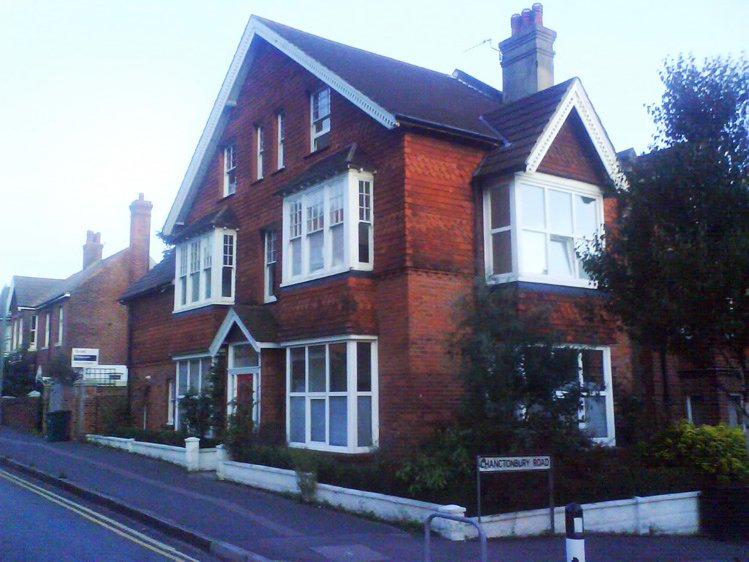
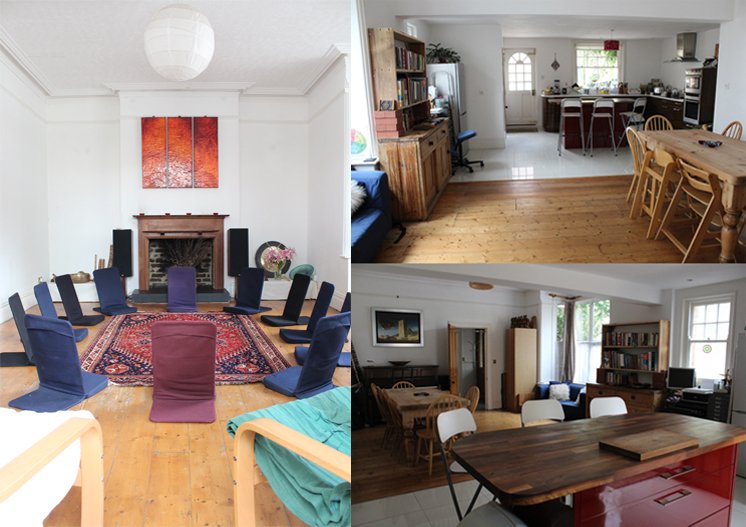
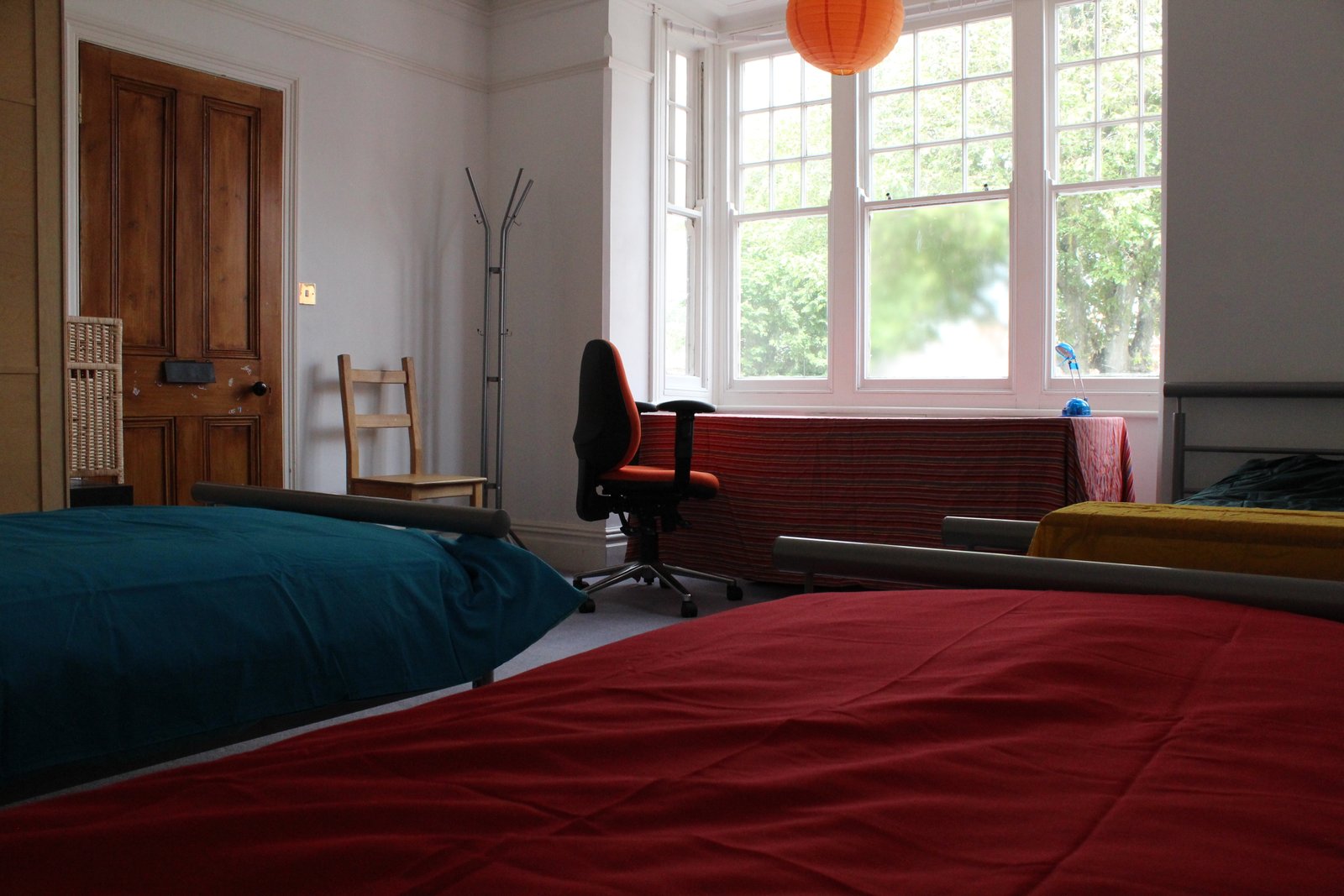
The 2012 HOME lasted one year. The new HOME is what you build when you know what the first one taught you. The vision has been tested in the world, has learned, and has matured.
Every founding enterprise has a prehistory. This is ours. We are proud of it.